
A – Z Library:
Common Allergy, Asthma, and Immunology Terms

Allergy
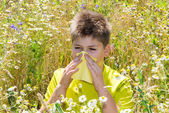
An allergy is a chronic condition involving an abnormal reaction to an ordinarily harmless substance called an allergen.
Allergens
An allergen is a typically harmless substance such as dust mites, pet dander, pollen or mold.
Aeroallergens
Aeroallergens are any of various airborne substances, such as pollen or spores, that can cause an allergic response.
Allergic Asthma
Allergic asthma is triggered by inhaling allergens. Through a complex reaction, these allergens then cause the passages in the airways of the lungs to become inflamed and swollen.
Allergic Rhinitis
Seasonal allergic rhinitis, often referred to as hay fever, is typically caused by outdoor allergens such as pollen from trees, grasses and weeds. Perennial allergic rhinitis occurs year-round. It is usually triggered by allergens such as pets or dust mites.
Conjunctivitis
Allergic conjunctivitis (also known as an eye allergy) is the most common allergy affecting the eyes.
Immunotherapy
The concept behind Immunotherapy (allergy shots or allergy tablets) is that the immune system can be desensitized to specific allergens that trigger allergy symptoms.
Allergy Immunotherapy consists of correctly identifying the allergen, quantifying the severity, and then developing a serum specific to each patient. The serum is composed of small amounts of allergens that are causing the patients symptoms. During the treatment course, increasing amounts of the allergen are administered to the patient. With the patient’s antibodies slowly increasing, the patient’s “resistance” slowly increases. The treatment process takes approximately three years.
Modified Quantified Testing (MQT)
Conventional prick testing only grossly estimates how allergic a patient is to each allergen by introducing them only into the outermost layer of the skin (the epidermis). To minimize discomfort and maximize efficiency, a “multi-test” device is used.
In MQT, epidermal prick testing and limited intradermal (a deeper layer of the skin) testing are combined to precisely extrapolate the degree of reactivity to each allergen.
Oral Mucosal Therapy (OMIT)
Oral Mucosal Therapy is allergy treatment delivered via toothpaste.
Pediatric Allergy March
The Pediatric Allergy March has 4 main characteristics:
- Food allergy and atopic dermatitis are typically seen first, not at birth, but beginning in the first 3 to 12 months of life
- These conditions can improve and be outgrown in many children during the preschool years
- Asthma and allergic rhinitis tend to declare themselves later, becoming increasingly common beginning at approximately 3 to 4 years and on into the school-age years
- The children who develop food allergy and/or atopic dermatitis often then develop allergic rhinitis and asthma; for example, atopic skin disease precedes and predicts airways allergic disease
Skin Testing
Allergy testing, also known as skin, prick or blood testing, is a method for determining to what substances a person is allergic.
- Intradermal (ID) Allergy Test – A type of skin allergy testing that is very sensitive and between the layers of skin.
Subcutaneous Immunotherapy (SCIT)
Subcutaneous Immunotherapy is allergy treatment delivered via injections.
Sublingual Immunotherapy (SLIT)
Sublingual Immunotherapy is allergy treatment delivered via drops under the tongue.